A new chapter in how we think about healing
Few areas of medicine have drawn as much hope, and as many questions, as stem cells. In my practice I hear from families living with complex, long-standing health challenges who want to know what regenerative medicine can and cannot do.
This post covers what stem cells are, why researchers are so hopeful, how I think about preparing the body, and where the evidence is still early. It is education, not a promise of results.
What stem cells are
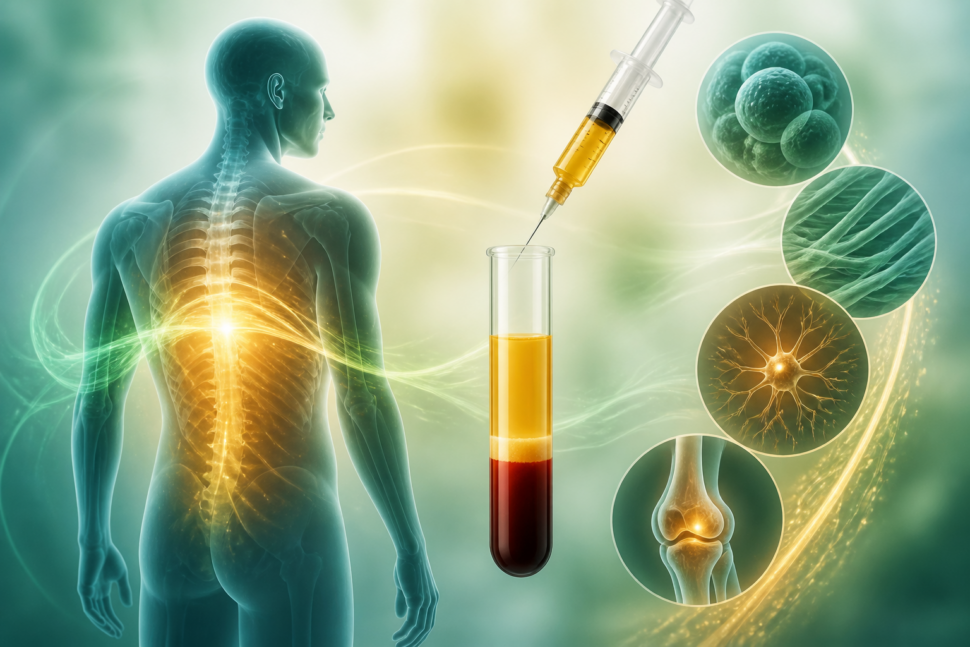
Stem cells are the body’s raw material: cells that can renew themselves and mature into more specialized cell types. Mesenchymal stem cells (MSCs), found in tissues such as bone marrow and the umbilical cord, are among the most studied.
Researchers believe part of their value comes from the signals they release, which may help calm inflammation, protect surviving cells, and influence the immune system, and not only from replacing damaged cells. Small messenger particles called exosomes are being studied for similar reasons.
Why there is so much hope
Researchers are studying two cell types in particular. Muse cells, a naturally occurring subset of mesenchymal cells, were described in a 2024 review as able to travel to injured tissue and support repair, and they did not form tumors in the studies reviewed. In a mouse stroke study, Muse cells integrated into the injured brain region and took on neuron-like features. Wharton’s jelly stem cells, from the umbilical cord, are another focus: in a rat stroke study, they traveled to the injured cortex, developed neuron-like features, and neurological function significantly recovered.
This work is still early, and most of it so far has been in the laboratory and in animals, but it is a big part of why so many of us are hopeful about regenerative medicine.
Mike Berkowitz and his team have seen patients who received a specific combination, which we will discuss in the webinar (neurocognitive therapies, Muse cells, Wharton’s jelly cells and exosomes), do very well. To my knowledge, no one else is doing quite what they are doing. Those are individual experiences, not controlled studies, so I cannot promise that anyone else will have the same result.
Preparing the body: why I look at the whole picture
My approach rests on a simple idea: cells do best in a body that is ready for them. Before talking about any regenerative option, I look at what may be getting in the way, through testing to understand each person’s individual picture, support for the body’s natural detoxification pathways, and attention to nutrition and lifestyle.
TruDose is one part of that picture. It is a platelet-based therapy made from your own blood: a blood analysis sets a personalized dose, which is then given by IV. You can read more on our TruDose page, or watch our recent webinar, PANS/PANDAS & Autism: How TruDOSE Is Breaking New Ground.
In our webinar, most of the time is devoted to stem cells, with TruDose as a shorter segment, so there is room to answer your questions.
Join us on October 28
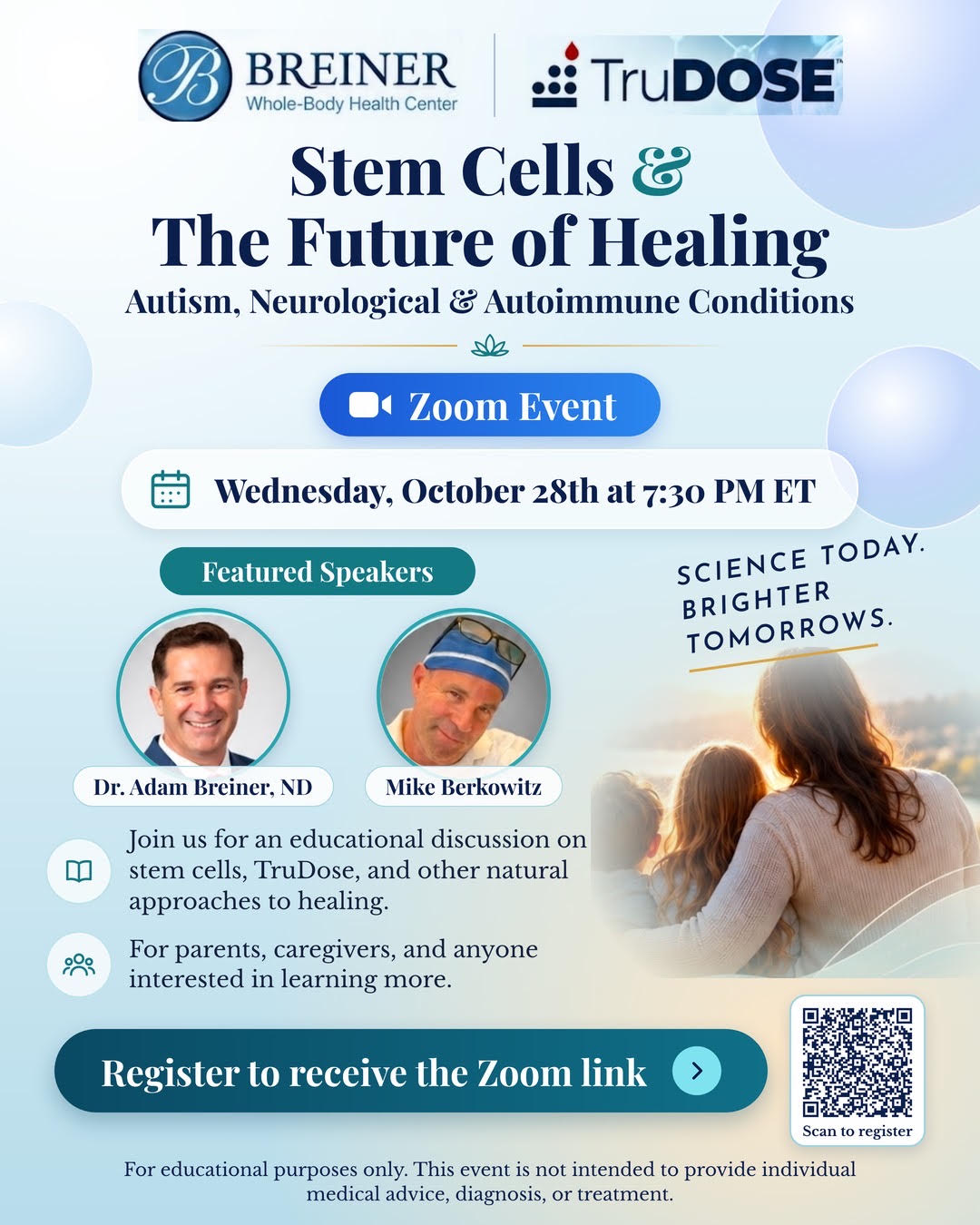
I would love for you to join Mike Berkowitz and me for Stem Cells & The Future of Healing, an educational Zoom event on Wednesday, October 28th at 7:30 PM ET. We will discuss stem cells, TruDose, and other natural approaches to healing, and we will save time for your questions.
The event is for parents, caregivers, and anyone interested in learning more.
For educational purposes only. This event is not intended to provide individual medical advice, diagnosis, or treatment.
Sources
- Que H, et al. Multilineage-differentiating stress-enduring cells: a powerful tool for tissue damage repair. Front Cell Dev Biol. 2024. doi:10.3389/fcell.2024.1380785
- Yamauchi T, et al. Therapeutic effects of human multilineage-differentiating stress enduring (MUSE) cell transplantation into infarct brain of mice. PLOS ONE. 2015. doi:10.1371/journal.pone.0116009
- Zhang L, et al. Neural differentiation of human Wharton’s jelly-derived mesenchymal stem cells improves the recovery of neurological function after transplantation in ischemic stroke rats. Neural Regen Res. 2017;12(7):1103-1110. doi:10.4103/1673-5374.211189