Neurofeedback & qEEG Brain Mapping
A painless, non-invasive way to train your brain toward better performance — using advanced EEG imaging and real-time feedback so your brain can learn to balance its own activity.
- Painless & non-invasive
- Guided by your brain map
- Drug-free
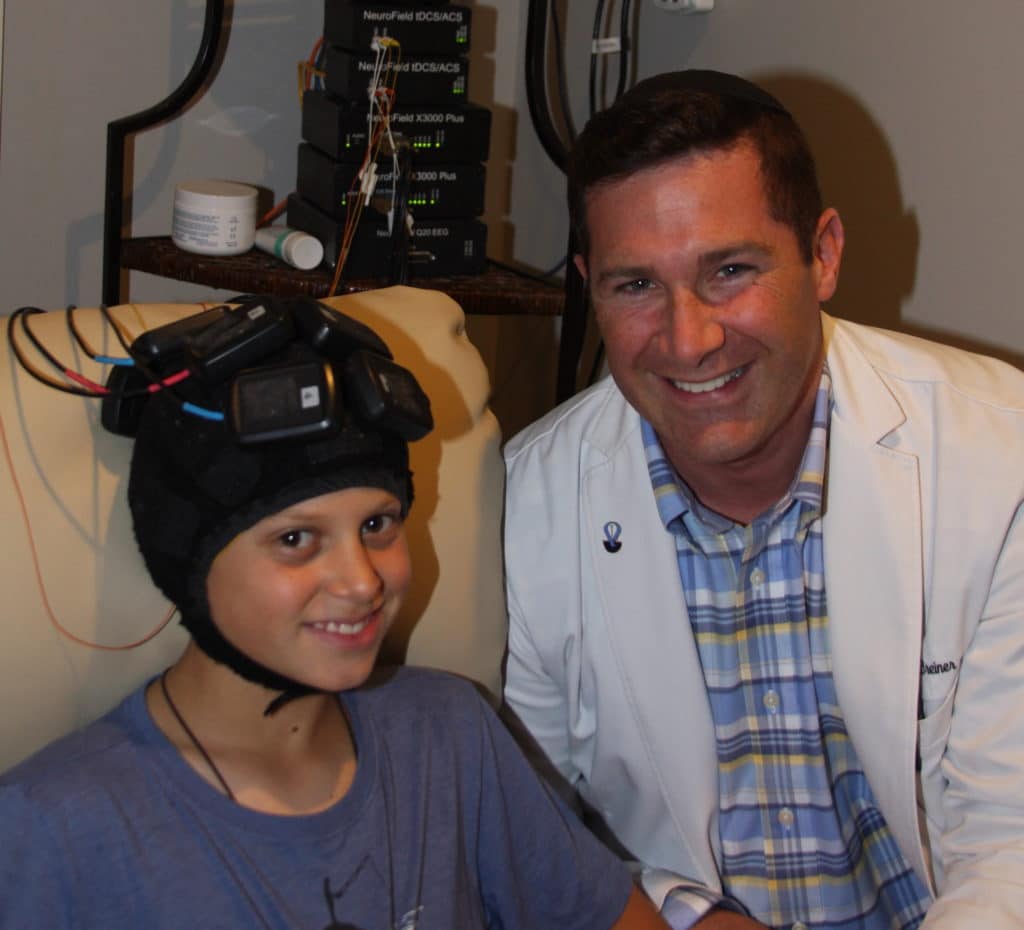
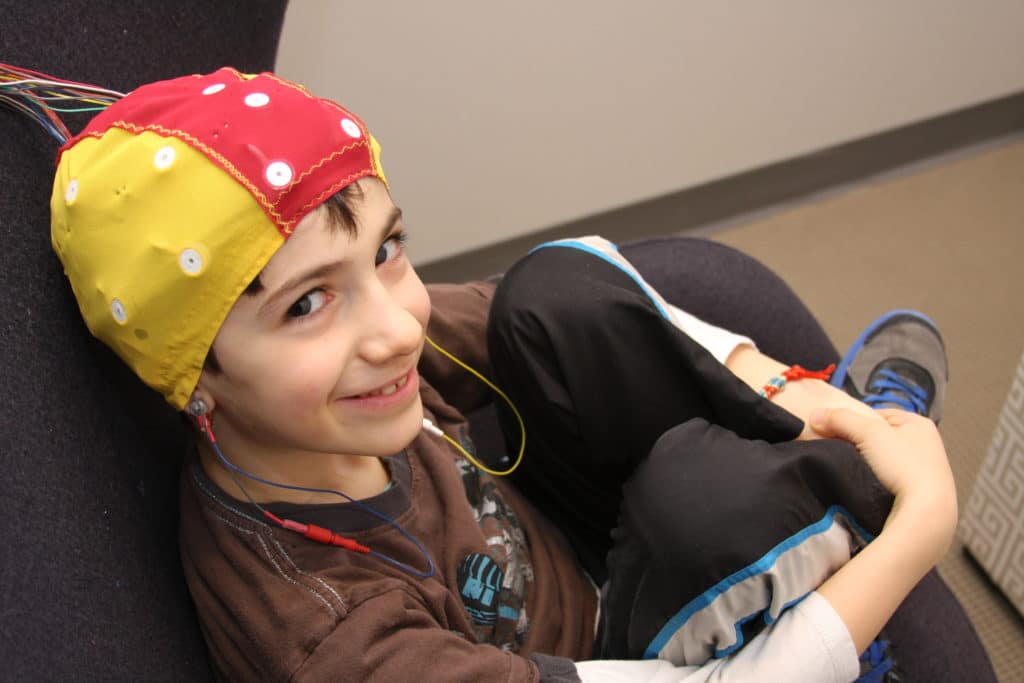
Training your brain to work at its best
An EEG (electroencephalogram) measures your brain's electrical activity — a window into brainwave patterns and whether they're balanced.
Neurofeedback adds a real-time feedback loop. As you watch a movie or play a simple game, your brain is rewarded the moment it produces healthier patterns. The brain likes to be rewarded, so over many sessions it learns those patterns and forms new pathways that "hardwire" the change.
Best of all, almost all of this work happens on an unconscious level. You simply relax.

It starts with a map of your brain
Every program begins with a baseline brain map. Using live sLORETA imaging, we can see electrical activity deep within the brain's cortex in real time — not just at the surface, as with a typical EEG.
We pair the map with objective testing, such as the CNS Vital Signs computerized neurocognitive assessment and BTrackS™ balance testing. Together, they show us where to focus training, and give us a baseline to measure your progress against.
What to expect
- 01
Baseline brain map
A qEEG brain map and cognitive testing show how your brain is working today.
- 02
Your protocol
Training is tailored to your brain map and goals — no two protocols are the same.
- 03
Training sessions
Sensors or an EEG cap read your brainwaves while you watch a movie, play a simple game or relax with eyes closed.
- 04
Re-map & track
We re-measure along the way, so you can see what's changing and we can refine your training.
Tools we combine with neurofeedback
Neurofeedback is often paired with other brain-focused therapies, chosen based on your brain map.
EEG neurofeedback
Real-time brainwave training that rewards healthier patterns.
Transcranial electrical stimulation
Gentle, non-invasive electrical stimulation guided by your EEG brain map.
Pulsed magnetic stimulation
Non-invasive magnetic-field neurostimulation (NeuroField), often combined with neurofeedback.
Photobiomodulation
Laser light therapy that supports mitochondrial energy and helps calm inflammation.
-
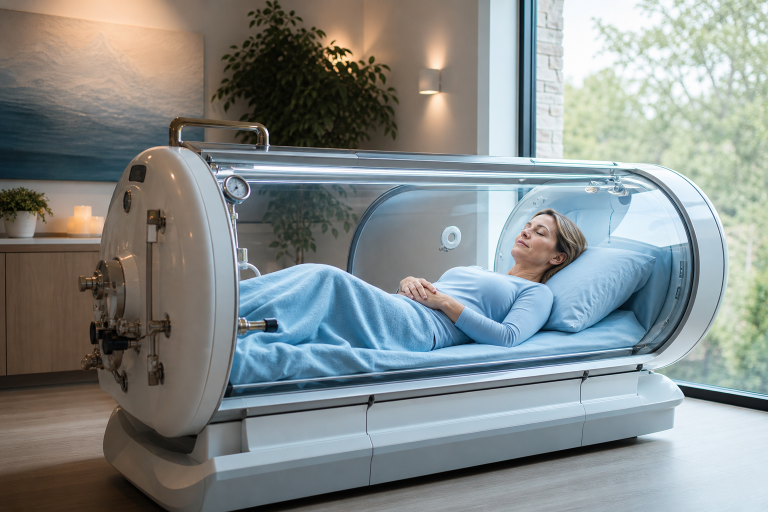
Hyperbaric oxygen
Pure oxygen under pressure to support brain oxygenation and healing.
Learn more -
Brain Health IV
A nutrient infusion formulated to work alongside neurocognitive therapies.
Learn more
Conditions neurofeedback can support
Because the brain operates less effectively as we age, nearly everyone can improve their mental performance. Neurofeedback is also used for a wide range of conditions.
Tinnitus
- Ringing in the ears
Peak performance
- Athletes
- Students
- Business professionals
Real changes, session by session
After four sessions, Janet noticed better concentration. By session ten, her memory had improved and people commented on her mood. "It's as if my whole life I was drifting and didn't even know it."
Sammy, who has dyslexia, always wrote his letters backward. After targeted neurofeedback sessions, he started writing correctly and excelling in school.
Tim, a high school athlete, struggled with focus and depression. After only a few sessions his mood lifted, and his coach noticed the change on the field.
Trained, experienced guidance
The brain is complex. Neurofeedback should always be guided by trained professionals using detailed brain maps.

Common questions
Not at all — it's painless and non-invasive. The EEG simply reads your brain's activity while you receive real-time feedback.
The brain, like the body, operates less effectively as we age — so nearly everyone can work to improve their mental performance through neurofeedback.
It varies from person to person, but many patients notice improvements in mood, memory, focus and attention within 10 to 15 sessions. Further training often brings continued improvement, especially alongside nutrition and other whole-body support.
Yes. It's non-invasive and well suited to children. It's commonly used for attention, learning and focus challenges, and kids usually enjoy sessions because they watch a movie or play a game.
Neurofeedback is one of the safest ways to support neurological issues. Because the brain is complex, it should only be guided by trained professionals using brain maps — especially in more complex cases, where temporary healing reactions can occur.
sLORETA is an advanced EEG imaging method that estimates activity deep within the brain's cortex in real time, rather than only at the surface. It gives a much more detailed picture to guide training.
Yes. It's often paired with neurostimulation, hyperbaric oxygen, Brain Health IVs and nutrition. Addressing deficiencies, food sensitivities and toxic burden can help the brain respond even better.
Articles & videos
More brain performance services

Map your brain. Train your brain.
Schedule a consultation to start with a baseline brain map and a plan built around your goals.