IBS & Chronic Bloating
Ongoing bloating, cramping, and irregularity that conventional tests often can't explain.
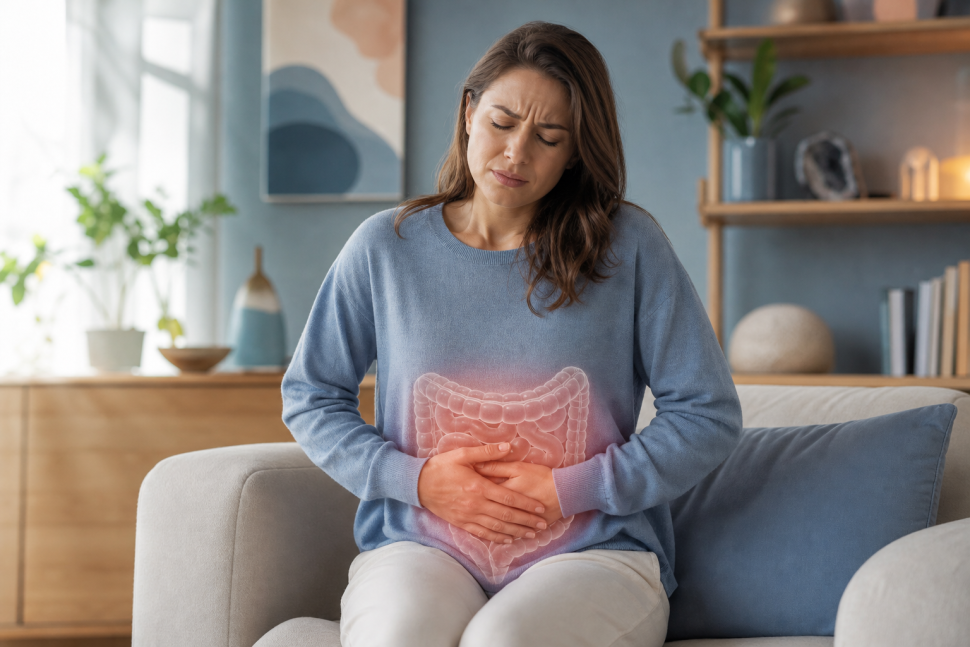
Signs you might recognize
- Bloating that builds through the day
- Cramping or abdominal pain relieved by a bowel movement
- Diarrhea, constipation, or both
- Gas and urgency
- Symptoms that flare with stress or certain foods
- Normal colonoscopy or tests, but still no answers
What causes it
IBS is a description of symptoms rather than a cause. Common underlying drivers include SIBO and gut dysbiosis, food sensitivities, low digestive enzymes, past infections or food poisoning, stress and the gut-brain connection, and mechanical tension in the abdomen. Many people with IBS have more than one factor at play.
Ongoing bloating, cramping, and irregularity that conventional testing often labels but doesn’t resolve.
Our approach
We look for the specific drivers behind your symptoms, which may include SIBO breath testing and stool analysis. Care may include clinical nutrition, targeted gut rebalancing, digestive support, Visceral Manual Therapy, acupuncture, and nervous-system support for the gut-brain connection.
Frequently asked questions
My tests were normal. Is it all in my head?
No. Standard tests often don't look for SIBO, dysbiosis, or food sensitivities, which are common causes of IBS.
Why does stress make it worse?
The gut and brain are closely linked through the nervous system. Calming that connection is often part of lasting relief.
Is a special diet required?
Sometimes a short-term diet, such as low-FODMAP, helps. FODMAPs (fermentable oligosaccharides, disaccharides, monosaccharides, and polyols) are certain carbohydrates, found in foods like wheat, onions, garlic, beans, some fruits, and dairy, that are poorly absorbed and easily fermented by gut bacteria, causing gas and bloating. The goal is to find and fix the cause, not to restrict forever.
Not sure where to start? We’ll help you find the right path.
Schedule an appointment