Hormone Imbalance
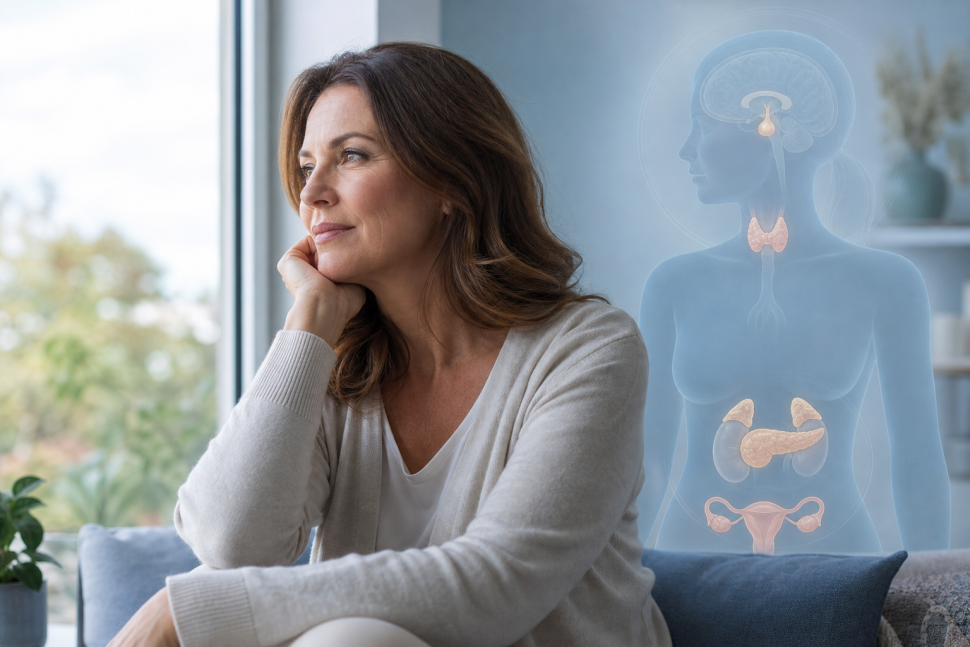
Shifts in hormones that affect mood, energy, libido, and wellbeing, for women and men.
Signs you might recognize
- Irregular, heavy, or painful periods
- PMS, mood swings, or irritability
- Low libido
- Fatigue and poor stamina
- Weight gain, especially around the hips or belly
- Acne, hair thinning, or unwanted hair growth
- In men: low energy, loss of muscle, low drive, or erectile changes
What causes it
Hormones work as a network: estrogen, progesterone, testosterone, thyroid, cortisol, and insulin all affect one another. Imbalances can come from age-related changes, chronic stress, blood sugar problems, poor liver or gut clearance of used hormones, nutrient gaps, excess body fat, and exposure to hormone-disrupting chemicals in plastics, pesticides, and personal care products.
Shifts in hormones that affect mood, energy, libido, and wellbeing — for both men and women.
Our approach
We test hormones in context, often including thyroid, adrenal, and metabolic markers, and look at how well your body processes and clears hormones. Care may include clinical nutrition, herbal and nutrient support, detoxification, stress and sleep support, and bioidentical hormone options when appropriate. We also help women with hormone-related concerns such as PCOS, endometriosis, and cycle irregularities.
Frequently asked questions
Do you treat men?
Yes. Men experience hormone imbalances too, including low testosterone and changes with age.
How are hormones tested?
Through blood, saliva, or dried urine, depending on what we need to see.
Do I need hormone therapy?
Not always. Many imbalances improve with nutrition, stress, and lifestyle support. When therapy is appropriate, we discuss options with you.
Not sure where to start? We’ll help you find the right path.
Schedule an appointment