3D Panoramic Imaging
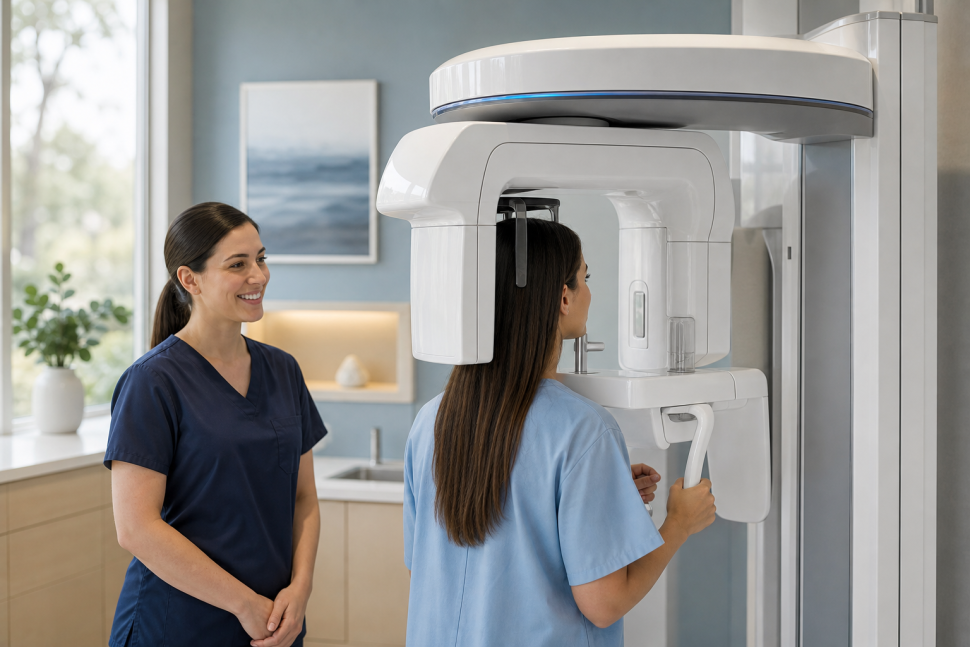
Clear diagnostic images with radiation kept as low as practical — plus 3D cone-beam CT scans of teeth, bone, sinuses, jaw joints and airway, each reviewed by a radiologist.
We use advanced digital technology to obtain clear diagnostic images while keeping radiation exposure as low as practical. Our non-radiation decay detection instruments also help us identify and monitor cavities, sometimes avoiding the need for additional X-rays. We tailor imaging to your individual needs, taking radiographs when they provide information necessary for your care.
3D Cone-Beam CT Imaging
We use three-dimensional cone-beam CT imaging, which allows us to evaluate teeth, bone, sinuses, and structures of the jaw joints (TMJs). It can reveal signs of hidden infection around tooth roots and other changes that may be difficult to see on conventional X-rays. We can also see the size of the airway and can measure bone density to help locate potential cavitations. All of our 3D scans are sent to a radiologist for review.
Benefits
- 3D view of teeth, bone, sinuses and jaw joints (TMJs)
- Reveals hidden infection around tooth roots
- Airway size and bone density to help locate cavitations
- Every 3D scan reviewed by a radiologist
- Non-radiation decay detection to limit X-rays
What to expect
We tailor imaging to your individual needs and take radiographs only when they provide information necessary for your care. Our non-radiation decay detection instruments can sometimes avoid the need for additional X-rays.
When a 3D scan is needed, our cone-beam CT lets us evaluate teeth, bone, sinuses, jaw joints and airway in detail. Every 3D scan is then sent to a radiologist for review.
Quick facts
Frequently asked questions
How do you keep radiation low?
We use advanced digital technology, take radiographs only when they provide necessary information, and use non-radiation decay detection instruments that can sometimes avoid the need for additional X-rays.
Why a 3D scan instead of a regular X-ray?
Cone-beam CT reveals signs of hidden infection around tooth roots and other changes that can be difficult to see on conventional X-rays, along with airway size and bone density.
Why Breiner
At Breiner Whole-Body Health Center, imaging isn’t just about teeth — it’s about understanding how your oral health connects to your whole body. Our 3D imaging helps us see hidden infections, airway issues and potential cavitations, and every scan gets a radiologist’s review.