Sleep Breathing Disorders
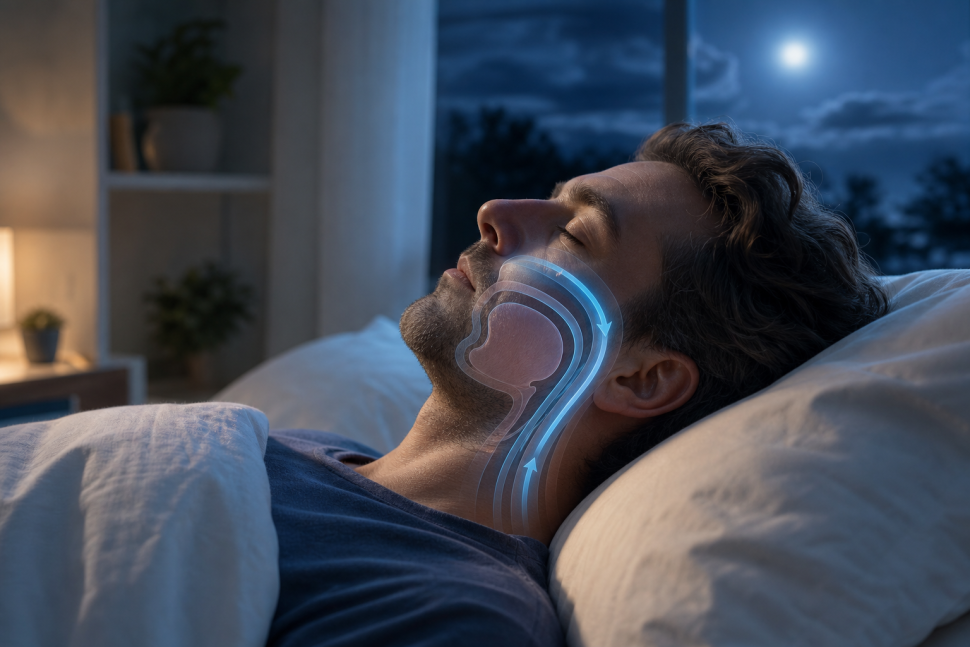
Sleep apnea is more than snoring. We use a 3D dental CT scan to evaluate your airway, and offer treatment options for adults and children as part of a whole-body plan.
Sleep Apnea and Whole-Body Health
Sleep apnea is more than snoring. Repeated interruptions in breathing can lower oxygen levels and disrupt restorative sleep. Untreated sleep apnea increases the risk of high blood pressure, heart disease, and stroke, and is associated with type 2 diabetes. Researchers are also investigating links with certain cancers. Loud snoring, waking up gasping, morning headaches, daytime fatigue, or feeling unrefreshed after a full night’s sleep are reasons to seek evaluation.
In our office, we use a three-dimensional dental CT scan to evaluate airway anatomy and identify areas of narrowing that may contribute to breathing problems. This complements a comprehensive dental and health assessment; a sleep study is needed to definitively diagnose sleep apnea and determine its severity.
Treatment depends on the type and severity of sleep apnea and may include continuous positive airway pressure (CPAP); orthodontic treatment when jaw or dental development contributes to airway restriction; or a custom dental appliance that helps reposition the jaw or tongue during sleep. In some cases, weight management may help reduce airway obstruction, particularly when excess tissue or tongue enlargement contributes to narrowing; the tongue enlarges with weight gain. Homeopathic approaches may also be considered as part of an individualized wellness plan.
Sleep Apnea in Children
Children can have sleep apnea, too, and the signs may look different from those in adults. Rather than appearing sleepy, a child may be hyperactive, irritable, or have difficulty paying attention. Disrupted sleep can affect memory, learning, and schoolwork, and may resemble or worsen symptoms of attention-deficit/hyperactivity disorder (ADHD). Frequent snoring, mouth breathing, restless sleep, bedwetting, or pauses in breathing deserve attention. We assess dental and jaw development that may contribute to airway narrowing and, when appropriate, coordinate with your child’s pediatrician, a sleep specialist or orthodontist for further evaluation.
Benefits
- 3D dental CT scan to evaluate airway narrowing
- Care for both adults and children
- Custom dental appliances and orthodontic options
- Coordination with sleep specialists and physicians
What to expect
We start with a comprehensive dental and health assessment and a three-dimensional dental CT scan to look at your airway anatomy and find areas of narrowing. A sleep study is needed to definitively diagnose sleep apnea and determine its severity.
Depending on the type and severity, treatment may include CPAP, orthodontic treatment, or a custom dental appliance that helps reposition the jaw or tongue during sleep — along with weight management or homeopathic support where appropriate.
Quick facts
Frequently asked questions
How do I know if I should be evaluated?
Loud snoring, waking up gasping, morning headaches, daytime fatigue, or feeling unrefreshed after a full night’s sleep are all reasons to seek evaluation.
What does sleep apnea look like in children?
Rather than appearing sleepy, a child may be hyperactive, irritable, or have trouble paying attention. Frequent snoring, mouth breathing, restless sleep, bedwetting, or pauses in breathing deserve attention.
Why Breiner
Sleep is foundational to health, and untreated sleep apnea raises the risk of high blood pressure, heart disease and stroke. We look at the airway as part of your whole system and work alongside your physicians and sleep specialists.